 |
| Sessa Printer's Mark, 1519 |
Monday, August 05, 2019
Library Cats
August 8 is International Cat Day! I must confess that our striped tabby, Tiger Belle, was less than impressed with our low-key celebration, although she did love the extra crunchy treats. This celebratory day in honor of our feline friends was established by the International Fund for Animal Welfare. Here is another cat from the Bell Library collection to enjoy. It was used as a printer's mark by the Venetian Sessa family, active in the printing and book trade in Venice from 1501 to 1617.

Monday, January 07, 2019
My Las Vegas Vacation
Everyone is always surprised when I tell them that I'm going to Las Vegas for my vacation. It's assumed that we're going to gamble and party, etc, which apparently seems out of character -- and of course it is. However, we actually like Las Vegas the city. There are museums, art galleries, other sites, and wonderful restaurants that are not on the Strip. And, it's where we were married. The last time we were there, we visited this marvelous lion preserve. When the city council voted to close the Las Vegas zoo, it had a difficult time placing the animals. Some locals created a preserve for the lions and a few others just off the south end of the strip: https://lionhabitatranch.org/ It's worth a visit.
 |
| Old Las Vegas Mormon Fort |
This year I'm sure we'll go back to one of our favorite restaurants: Forte Tapas Marvelous eastern European food in a funky and eclectic atmosphere, located in an unassuming strip mall well away from the Strip.
We also highly recommend a visit to the Mob Museum in downtown Las Vegas. One of the most well-done museums I've seen -- be prepared to spend several hours.
Monday, December 31, 2018
Blogging Again
It has been a
while. We moved the Bell Library to new
quarters this year and prepping for that, the actual move, and then the
unpacking and reorganizing have been all consuming. However, a new space is like a fresh slate
and I already have new habits. For one
thing, my office is clean, tidy, and organized!
I still have some artwork to hang on the walls, but otherwise it is a
cozy (in the warm rather than small sense) and welcoming -- and most important
-- usable space. It also has a
sit/stand desk, which I'm not used to yet -- keep putting files on the divide
between the desk and the filing cabinet.
Baby steps.
Another new
habit: better priority setting. I've found a new app for my phone: Wunderlist
It helps me keep track of my to dos and lets me to set due dates,
reminders, sub-tasks, etc. The reminders
help me keep on track and not succumb to distractions -- well, to as many distractions.
Will weekly blogging
become another new habit? Only time will
tell. In the meantime, here's a photo
from a Premodern Food Lab event
at the Bell Museum of Natural History (no, we are not the library of the
museum!) this past fall. Our event was
"Pickles of Yore" and as you can see, they were a big hit!
 |
| On her 4th pickle from a 17th-century recipe! |
Monday, January 08, 2018
Bad Ass Librarians of Timbuktoo
So, I couldn't resist picking up this book: The Bad-Ass Librarians of Timbuktoo by Joshua Hammer. Of course, all librarians are "bad-ass" -- just ask one what s/he's involved in and you'll know what I mean -- but these guys were heroic under extraordinary circumstances.
 Here's the book blurb: "In the 1980s, a young adventurer and collector for a government library,
Abdel Kader Haidara, journeyed across the Sahara Desert and along the
Niger River, tracking down and salvaging tens of thousands of ancient
Islamic and secular manuscripts that had fallen into obscurity. The Bad-Ass Librarians of Timbuktu
tells the incredible story of how Haidara, a mild-mannered archivist
and historian from the legendary city of Timbuktu, later became one of
the world’s greatest and most brazen smugglers.
Here's the book blurb: "In the 1980s, a young adventurer and collector for a government library,
Abdel Kader Haidara, journeyed across the Sahara Desert and along the
Niger River, tracking down and salvaging tens of thousands of ancient
Islamic and secular manuscripts that had fallen into obscurity. The Bad-Ass Librarians of Timbuktu
tells the incredible story of how Haidara, a mild-mannered archivist
and historian from the legendary city of Timbuktu, later became one of
the world’s greatest and most brazen smugglers.
In 2012, thousands of Al Qaeda militants from northwest Africa seized control of most of Mali, including Timbuktu. They imposed Sharia law, chopped off the hands of accused thieves, stoned to death unmarried couples, and threatened to destroy the great manuscripts. As the militants tightened their control over Timbuktu, Haidara organized a dangerous operation to sneak all 350,000 volumes out of the city to the safety of southern Mali."
This well written tale left me awestruck by the determination of Haidara and the many people who helped him save these priceless manuscripts, frequently putting their very lives at risk. Today, many of the salvaged volumes remain in danger from poor storage conditions, despite monumental efforts to preserve them.
The Timbouktou Manuscript Project web site provides additional information about this endeavor and links to a database of manuscripts as well as to some of the libraries set up to house them, including a library established by Haidara, himself, to house his own family's manuscript collection.

In 2012, thousands of Al Qaeda militants from northwest Africa seized control of most of Mali, including Timbuktu. They imposed Sharia law, chopped off the hands of accused thieves, stoned to death unmarried couples, and threatened to destroy the great manuscripts. As the militants tightened their control over Timbuktu, Haidara organized a dangerous operation to sneak all 350,000 volumes out of the city to the safety of southern Mali."
 |
| Abdel Kader Haidara |
The Timbouktou Manuscript Project web site provides additional information about this endeavor and links to a database of manuscripts as well as to some of the libraries set up to house them, including a library established by Haidara, himself, to house his own family's manuscript collection.
Monday, August 14, 2017
Mapping Cook's Endeavor
Fans of Captain Cook and his adventures and accomplishments might be interested to learn about the work of the Rhode Island Marine Archeaology Project (RIMAP), led by Dr. D. K. Abass. RIMAP's mapping of Revolutionary War-era British naval vessels in Newport harbor may have turned up Cook's Endeavour, the ship that took him on his very first voyage of exploration.
Cook's voyages are well documented. Not only did he provide the Royal Navy with an account of his ventures, but several crewman on the three voyages also published their own accounts. Sydney Parkinson, a Scots botanical illustrator, naturalist, and artist, was employed by Joseph Banks, a British naturalist and botanist, to accompany him on Cook's first voyage. Banks and Swedish botanist Daniel Solander collected hundreds of plant and animal specimens and it was Parkinson's job to draw them in detail. Parkinson also became fascinated with the people they encountered on the voyage and drew many of them as well, recording his experiences in a journal he kept during the voyage. Sadly, Parkinson died of dysentery in 1771 while aboard ship. Although Banks, as his employer, claimed all of his drawings and papers, including his journal, he lent it to Parkinson's brother, who published the journal with some of the drawings in 1773. We're fortunate to have a copy in the Bell Library collection.

The image at right, depicting the distinctively tatooed face of a New Zealand chief, is one of several published in A journal of a voyage to the South Seas in His Majesty's ship the Endeavour, London, 1773 (Bell 1773 fPa). Parkinson's images offered the European reading public their first glimpse of Pacific Islanders.
 According to the caption on this image (left), sticking out one's tongue at an enemy is a gesture of defiance.
Check out the Bell Library's online exhibit: Captain Cook's Voyages of Discovery
 | ||||
| The route of Cook's first voyage, HMS Endeavour, 1768-1771 |

The image at right, depicting the distinctively tatooed face of a New Zealand chief, is one of several published in A journal of a voyage to the South Seas in His Majesty's ship the Endeavour, London, 1773 (Bell 1773 fPa). Parkinson's images offered the European reading public their first glimpse of Pacific Islanders.
 According to the caption on this image (left), sticking out one's tongue at an enemy is a gesture of defiance.
 Check out the Bell Library's online exhibit: Captain Cook's Voyages of Discovery
Friday, August 11, 2017
Collaborating with Digital Vendors: Going over to the dark side?
I have been approached by several vendors of digital packages over the years who were interested in including materials from the James Ford Bell Library in new digital products. These vendors scan and package a variety of digital materials, drawn largely from archives and special collections, and then sell the packages to schools and universities. I resisted. Although these vendors situated the images within a well-researched historical context, something I favor over letting the images float about with a context, selling this material seemed wrong; it should be made freely available to anyone who asks. After two years of dithering, I changed my mind.
I realized that it might be years before this material could be scanned in-house and be made available through our own digital repository. Participating in one of these programs would get the material out there much sooner. Second, and I learned this during discussions with Adam Matthew Digital with whom we eventually partnered, our institution received Master TIFFS of all of the images, along with any new metadata that AMD creates for the image. Third, we receive royalties from sales, which can help us scan more of our own material. Yay!!! Fourth, participating in the project did not prevent us from sharing these materials with our researchers on an individual basis; we are only restricted from including them in a competing large-scale digital project, and we could include scans of items from the collection that we already had that were pertinent to the project; these items would be under no restrictions, but still would be shared with a potentially broader audience through the project. And fifth, I could help shape the context in which the images were were viewed.
A colleague in another unit in the U of MN Libraries also decided to participate in a different ADM project, so we developed the contracts, procedures, and protocols together, which will now serve as a model for any future projects we or our colleagues may pursue.
The Bell Library is partnering with Adam Matthew in the "Age of Exploration" package, scheduled to be released in 2018. If you are interested in this or other Adam Matthew Digital projects, check out their web site: http://www.amdigital.co.uk/
I realized that it might be years before this material could be scanned in-house and be made available through our own digital repository. Participating in one of these programs would get the material out there much sooner. Second, and I learned this during discussions with Adam Matthew Digital with whom we eventually partnered, our institution received Master TIFFS of all of the images, along with any new metadata that AMD creates for the image. Third, we receive royalties from sales, which can help us scan more of our own material. Yay!!! Fourth, participating in the project did not prevent us from sharing these materials with our researchers on an individual basis; we are only restricted from including them in a competing large-scale digital project, and we could include scans of items from the collection that we already had that were pertinent to the project; these items would be under no restrictions, but still would be shared with a potentially broader audience through the project. And fifth, I could help shape the context in which the images were were viewed.
A colleague in another unit in the U of MN Libraries also decided to participate in a different ADM project, so we developed the contracts, procedures, and protocols together, which will now serve as a model for any future projects we or our colleagues may pursue.
The Bell Library is partnering with Adam Matthew in the "Age of Exploration" package, scheduled to be released in 2018. If you are interested in this or other Adam Matthew Digital projects, check out their web site: http://www.amdigital.co.uk/
Saturday, April 01, 2017
Find Delight In the Book Arts
 | |
| Noam Sienna: Contemporary art with early modern roots. |
As our knowledge sources become more digital, the book as physical object, whether a manuscript or printed, is becoming more precious. The Minnesota Center for Book Arts celebrates the book and the book arts, their traditions and new incarnations.
I was fortunate to attend the opening of a new exhibit at MCBA this week: Take Words With You: In Our Home and In Our Ways. One of the students in my graduate seminar, Noam Sienna, is one of the featured artists. I encourage you to check it out; it will be on display through May 28, 2017 in the Cowles Literary Commons in the Open Book building, 1011 Washington Avenue South, Minneapolis.
ABOUT THE ARTISTS
Noam Sienna is a Hebrew calligrapher and manuscript artist who investigates the relationship between letters, image, color and light, inspired by the tradition of Jewish books throughout the centuries. His graduate work in Jewish History and Museum Studies provides his art with deep roots and a commitment to seeing the past come alive again in the present.
Aaron Greenberg Silver’s artwork is typically created by cutting paper, but he has also worked in watercolor, steel, and clay. He invites the viewer to see objects and ideas in new ways, extracting the essence of a scene or object to portray it unencumbered by extraneous material.
Demetrios Vital’s artmaking begins in awe and curiosity of natural history and Jewish community. In search of a connection between letters and life, he creates and restores sacred manuscripts with careful attention to their history and place within their community. His calligraphic art combines Hebrew scribal traditions and text, with modern sources of inspiration.
Friday, March 31, 2017
Magazines, magazines, magazines
I'm a hoarder. I confess it.
Magazines have taken over my family room. I just may need that recipe for the perfect short ribs (with the
bonus recipe for short rib tacos made from the leftovers) or the instructions
for cleverly painting floor cloths using cut potatoes and milk paint sometime
in the future, so even though I have already read these magazines cover to
cover, I feel I must keep them. Something in them might come in handy someday.
 I have thought about
getting rid of them. Indeed, I have come up with several strategies. I could cut out all of the recipes and paste
them onto paper and put the paper into binders--ridiculous for so many reasons!
I could type all of the recipes I think I might want into a database, but life
is way too short-- and getting shorter.
I could get a fancy hand-held scanner and scan all of the recipes into
the computer, but then I would still have to figure out how to organize them
and they would take up loads of web space that I don't have. I could rip out and put into tidy folders
all of the decorating ideas. But I'm not
in need of another project. I already
have a lot of projects (a subject for another time). And I don't have the shelf or drawer space
all of the tidy folders would take up should I actually figure out how to
organize all of the ideas.
I have thought about
getting rid of them. Indeed, I have come up with several strategies. I could cut out all of the recipes and paste
them onto paper and put the paper into binders--ridiculous for so many reasons!
I could type all of the recipes I think I might want into a database, but life
is way too short-- and getting shorter.
I could get a fancy hand-held scanner and scan all of the recipes into
the computer, but then I would still have to figure out how to organize them
and they would take up loads of web space that I don't have. I could rip out and put into tidy folders
all of the decorating ideas. But I'm not
in need of another project. I already
have a lot of projects (a subject for another time). And I don't have the shelf or drawer space
all of the tidy folders would take up should I actually figure out how to
organize all of the ideas.
Periodically in
these magazines there is an article about decluttering and I get inspired. I decide that I will read through the
magazines one last time and then get rid of them. However, there seems to be no such thing as
one last time. I find something I want
to try and decide to keep it. And I run out of time--I have a couple hundred of
these magazines. You wouldn't think this would be such a dilemma for someone who works in a library; maybe that's why it's so difficult. Sigh.
Last Sunday, however, I had a break
through. I read, in yet another
magazine, the same ideas but put quite differently: "Make room to breathe." "Simplify." "Make room for
what matters." The article wasn't
referring only to physical clutter but mental and emotional clutter, as
well. I realized that my inability to
come to a decision about these magazines was creating a lot of unnecessary
stress in my life. They were taking up
space, both physical and mental, that could be used more wisely, to better effect.
I filled a bag with
magazines that I know a friend would like and put it in the car, ready to
deliver. I filled two more bags for
recycling. That was all I had time for
but I now have an entire shelf emptied.
What's more, I copied down the urls for the magazines, where they
regularly post recipes and ideas. My
husband and I agreed to cancel all our subscriptions. No magazines come into the house except
mindfully and they go out at the end of the month--no matter what!
I'm kind of
sad. I love to hold books and magazines,
I like to flip pages. Magazines can be
carted around easily, no power source or internet necessary; I can read them
anywhere. I appreciate their design, how
the image and text come together harmoniously.
I will miss them. But it was
time.
I
would rather be a collector, mindfully acquiring beloved, useful things, rather
than a hoarder. And I do collect
things: cake stands, vintage linens,
antique tea cups and dessert plates…. But these are lovely things that I use to
entertain family and friends, that one day will be passed down to a grandchild,
niece or nephew. I also collect books,
but again I am now collecting them more mindfully. Paperback books that I know I won't read
again are passed on to new readers quickly, and I'm getting more and more light
reading for my Kindle.
Ummm...while searching online for the image included with this post, I discovered a site that demonstrates how to make collages using magazines....
Thursday, February 23, 2017
The Cronicle of Alfonso X
The Estoria de Espanna Digital project is an electronic research environment and searchable digital edition of the chronicle of Alfonso X, king of Castile and Leon. Aengus Ward, University of Birmingham, UK, has assembled a team of scholars to bring together the rich manuscript tradition of this document in digital form.
 During the month of February 2017, several of the extant manuscripts are being exhibited by the institutions that hold them in their collections. The University of Minnesota's copy will be on display at the James Ford Bell Library through the end of the month. Following the exhibition, it may be seen in person by request at the Bell Library. The complete manuscript is also available online: Primera Cronica General de España

Wednesday, February 22, 2017
Library Cats I
I
wish we could have a library cat like other libraries do. However, we really can't risk a hairball
suddenly gracing the open pages of the first printed edition of Marco Polo's Travels (Bell Call # 1477 Po).
Hence the title of this blog: it
reflects my own cat-like curiosity about the world and its books. And although I can't cuddle up with one on a
rainy afternoon at work, cats do grace several of the pages in the Bell
Library's rare book collection. Take
this one, for instance, a medieval mouser complete with trophy.
It's a hand-drawn marginal illustration in our copy of Bartholomeus Anglicus' Le
propriétaire des choses. This late 14th-century Old French edition of the 13th-century Latin original, De proprietatibus rerum, is a marvelous example of a decorated and illuminated European book.
Bartholomeus, a Franciscan monk, compiled his master work ca. 1240; it was translated into French by Jean Corbechon in 1372.
 |
| Bell Library shelf mark: 1400 oBa |
Bartholomeus, a Franciscan monk, compiled his master work ca. 1240; it was translated into French by Jean Corbechon in 1372.
Sunday, March 06, 2016
Following Captain Cook
I was on a crowded bus heading north, my husband beside me, when the driver said "And on your right is Cook's Inlet." My mind blew up. Captain James Cook and his crew had actually sailed the Resolution into that bay--the very first Europeans to have seen it. And here I was, driving along its shore myself, a faint drizzle marring what would be a rather blurry photo. All of a sudden I was there, aboard the Resolution, awestruck by the way the land rose directly up from the sea, how the mist shrouded some but not all of ridges. I stayed in this state of suspended historical animation for the entire Alaska cruise, from Seward to Vancouver.
 We began our Alaskan adventure in Anchorage, after an easy non-stop five-hour flight. (It took us 14 hours and 4 planes to get to Acapulco last January so we already were in heaven.) The Anchorage Museum, outside of which we would pick up our bus to Seward and the cruise ship, had on exhibit a fabulous homage to Captain Cook and his third voyage: Artic Ambitions: Captain Cook and the Northwest Passage. It was brilliantly done, with original paintings, diaries, and other items on loan from Australia, England, and other places, as well as items from the museum's own collection. As a curator of rare materials who often mounts exhibitions, I was green with envy at the custom made cases and exhibit stands, the custom interpretative maps and models. My husband found it very amusing as I went around the exhibit mumbling "we have that," we have that, too," "Oooh, I wish we had that one," "Look honey, we have that at home!" The Bell Collection is super when it comes to Cook materials, but we don't have any of the original drawings or watercolors that were part of this exhibition. The image featured here is by artist John Webber: A Man of Oonalashka. From James Cook, A Voyage to the Pacific Ocean. London: G. Nicol and T. Cadell, 1785. Bell Library Call# 1785 Co You can find it and other images in our online exhibition: Captain Cook's Voyages of Discovery.
 Alaska is the most moving and beautiful place I have ever been. It was also the most surprising--from the world-class cuisine at Seward's The Cookery to the sparse population of even the largest of its few cities to the local history about which I was appalling ignorant. On March 30, 1867, the U.S. government, in the person of Secretary of
State William Seward, reached an agreement with the Russian empire to
purchase Alaska for more than $7 million. Called "Seward's Folly,"
opposition to the purchase didn't really die down until gold was
discovered in the Klondike in 1896.
Alaska is the most moving and beautiful place I have ever been. It was also the most surprising--from the world-class cuisine at Seward's The Cookery to the sparse population of even the largest of its few cities to the local history about which I was appalling ignorant. On March 30, 1867, the U.S. government, in the person of Secretary of
State William Seward, reached an agreement with the Russian empire to
purchase Alaska for more than $7 million. Called "Seward's Folly,"
opposition to the purchase didn't really die down until gold was
discovered in the Klondike in 1896.
The people of Alaska, descendants of the indigenous population and transplanted "southerners" alike, work hard to keep that history alive and to share it with visitors. Our visit to Skagway immersed us in history from the very beginning, when we boarded an old trolley car, converted to wheels, for a tour.
Our tour guide shared a variety of fun facts, history, and local sites, from the cost of a gallon of milk -- $7.00 -- to the story of the shootout between Frank H. Reid, a local businessman and city surveyor and outlaw Jefferson "Soapy" Smith in July of 1898. Control of the town was at stake. Smith shot Reid, who died of his wounds eight days later. We also saw Sarah Palin's childhood home.
I was hoping to see a lot of wildlife, but the weather often made visibility poor--if they were there, we didn't see them. We did see amazing scenery at every turn, including this and other glaciers.

Despite the distance of time, it was easy to picture Cook and his crew in every bay and along every shore.


The people of Alaska, descendants of the indigenous population and transplanted "southerners" alike, work hard to keep that history alive and to share it with visitors. Our visit to Skagway immersed us in history from the very beginning, when we boarded an old trolley car, converted to wheels, for a tour.
 |
| Our tour guide posing at Reid's tombstone. |
I was hoping to see a lot of wildlife, but the weather often made visibility poor--if they were there, we didn't see them. We did see amazing scenery at every turn, including this and other glaciers.

Despite the distance of time, it was easy to picture Cook and his crew in every bay and along every shore.
Saturday, February 27, 2016
About Polar Bears

Today is International Polar Bear Day. As far as I can tell, this is a "holiday" created and promoted by Polar Bears International, a conservation organization dedicated to the preservation of polar bears and the environment in which they live.
I've always been a fan of bears, beginning with my well-worn childhood teddy bears. I had two. A very small one I must have received as an infant that I literally hugged to pieces, and a larger one that I managed to keep intact until I was about 17. For the life of me I cannot remember their names. I know they had names because I always name my stuffed animals. My brothers started giving me teddy bears for birthdays and Christmas in my early 20s; my husband added books and I've purchased a few small bears myself, so now I have quite a collection. These furry, sometimes well-dressed, creatures live on my bookshelves. And lest you imagine a few tidy bookcases in a den or study upon which sit an equally tidy row of small stuffed bears, think again. I'm an academic. There are bookcases in the entryway, bookcases in the living room, bookcases in the large unnameable room on the other side of our kitchen bar that, while it does contain our large kitchen table, also has a desk, love seat, easy chair, end table, and exercise bike, bookcase on the landing going up to the second floor, bookcases in the bedroom, bookcases in the tv room, bookcases in my office, and a host of bookcases in the basement family room. Teddy bears can be found both upstairs and downstairs. I keep a couple of especially cuddly ones on the lower shelves of one of the family room bookcases so they are within easy reach of the great-grandchildren. They know where they are, particularly the three- and four-year olds. My fascination with teddy bears led me to the Teddy Bear Museum of Stratford-upon-Avon in England in the early 1990s. Some of this collection is now housed at the Polka Theatre in London, but there is also a Teddy Bear Museum in Dorset that has a wonderful collection, including a 1906 bear created on the original 1902 US pattern by Morris and Rose Michtom: "Teddy's Bear." Their website includes a short history of the origins of the teddy bear.

Thursday, February 18, 2016
Black History Month
Education has played an important role in this national holiday, starting with its precursor, Negro History Week, in 1926. Black History Month has been soundly criticized on a number of fronts, including the charge that it is racist and that the history of a race cannot and should not be relegated to a single month. However, in the spirit of George Santayana's (1863-1956) famous quote: "Those who do not remember the past are condemned to repeat it," Black History Month helps us to focus attention on several aspects of our history that we must not forget.

Stedman was in Suriname for five years. While there he kept a journal and several diaries, wrote letters, and made watercolor sketches of what he saw and what he felt about it. He used these observations to craft a more formalized account of his time there, which was published by the radical British printer, Joseph Johnson, in 1796, with engravings based on Stedman's watercolors by William Blake and Francesco Bartolozzi.
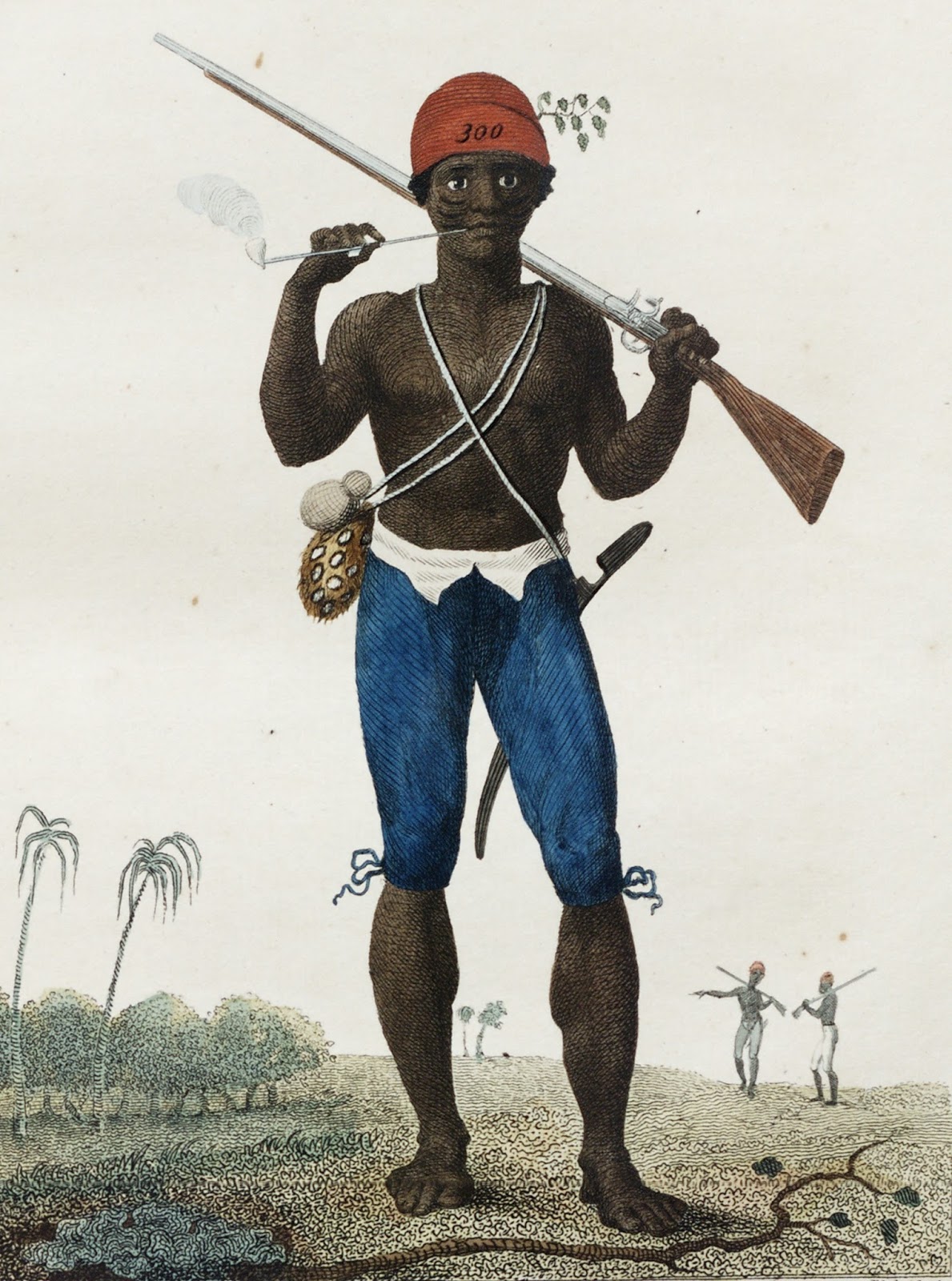
The James Ford Bell Library is fortunate to have Stedman's diaries, journals, letters, and five of his original watercolors, as well as his own copy of his handwritten manuscript produced prior to publication. We have digitized all of this material; it is freely available through the University of Minnesota Libraries' UMedia Archive: Stedman Archive. Anyone visiting the Bell Library in person also is welcome to view and use these materials for research.
The James Ford Bell Library has extensive resources in the slave trade between Europe and the Caribbean and South America, with lesser holdings related to slavery in North America prior to 1800CE.
Wednesday, February 17, 2016
Just What is a Maraschino Cherry?

While I was baking Christmas cookies in December, I started wondering about the origins of our neon red maraschino cherries. I did a little research and discovered that American maraschino cherries are actually a result of US government intervention in trade.
The Marasca cherry, a type of cultivated Morello cherry from Dalmatia, was used to create the popular Maraschino liqueur, using a method of distillation developed by Venetian Giuseppe Carceniga and later perfected by Francesco Drioli, a Venetian merchant. In 1759, Drioli founded the Fabbrica di Maraschino in Zara, the capital city of Dalmatia, to produce the liqueur on a massive scale. By the end of the 18th century his liqueur, bottled in green Murano glass, was famous worldwide and he held privileges and royal warrants from courts across Europe.
Whole cherries preserved in this liqueur, also popular throughout Europe, were known as maraschino cherries. These preserved cherries were extremely expensive as an export product and when they finally made it to the United States in the late 19th century, they could only be found in expensive fine dining establishments. The introduction of Prohibition in the U.S. in 1920 made true maraschino cherries even more difficult to obtain. Coincidentally, research conducted at Oregon State University by Ernest Wiegand led to the production of preserved cherries without alcohol. Although the USDA had, in 1912, decreed that maraschino cherries were “marasca cherries preserved in maraschino,” following prohibition and under pressure from the anti-alcohol lobby, it changed its definition.
From 1940, maraschino cherries have been officially defined in the U.S. as “cherries which have been dyed red, impregnated with sugar and packed in a sugar syrup flavored with oil of bitter almonds or a similar flavor." I think that's rather sad. Fortunately, “real” maraschino cherries are still available from Luxardo, a firm established in 1821 as a rival to Drioli. These imports are still expensive, but I’ve ordered some and look forward to trying them—although I must confess I quite like the neon red ones I put in my cookies.
While waiting for my cherries to arrive, I did purchase a bottle of Maraschino liqueur, which still comes in a green glass bottle, but is now marketed as Maraschino Luxardo and produced by the firm of that name. To my mind, it falls into the same category as grappa and aquavit, produced in a similar fashion with a similar taste; it's also 32% alcohol by volume--not for the faint of heart. Fortunately, around the neck of the bottle I purchased was a small brochure that contained some cocktail recipes. My favorite is the Aviation, which has it's own Wikipedia page.
Friday, January 01, 2016
First Post
It's New Year's
Day. My husband and the cat are napping
and, while I, too, have eaten too much junk food this afternoon, I've not yet
reached the point of carb-induced coma, so I thought it would be a good time to
start my blog. Quiet and no cat on
the keyboard -- I give it about 10 minutes.
We had
a quiet Christmas this year. My sister and my brother
and his family came over for dinner on Christmas Eve. It's been a tradition for the past 7 or 8
years, with only a couple of misses due to weather or illness. This year my sister's son and his fiancé
couldn't make it and we missed them;
they've been dating for several years but just recently became
engaged.
Dinner
with my family is a pretty casual affair, so this year I stepped it up a bit
and served a "fancy" vegetable.
Along with the honey-glazed ham, cheesy potatoes, salad, and
burned-on-the-bottom crescent rolls (I always forget to put them in the second oven
instead of the very hot oven that roasted the ham and potatoes), I served
french cut green beans that, amazingly, were a big hit! I did find it sad that my nieces and nephews had never seen a french cut green bean. I defrosted the green beans, tossed
them with thyme, salt & pepper, and lemon-infused olive oil, then heated
them through in a skillet.
Delicious! If I were making this
for company or taking the dish to a pot luck, I'd add sautéed
slivers of sweet red peppers and chopped scallions, green and white bits --
also in the lemon olive oil -- to the beans, perhaps topping with some toasted
chopped pecans or bread crumbs and slivered almonds. Although I must admit that the slivered
almonds take me back to a rather nightmarish casserole topped with them that
one of our neighbors gave my Dad when Mom was in the hospital having my baby
brother -- same brother who was at the
table on Christmas Eve. My father, who
was a superb cook, dished it up, took a couple of bites, looked at our faces,
and tossed it. I think we ended up
enjoying french toast instead....
Well, the cat has
arrived to help me write, so I will wrap up this first post with a note about
another first that is in keeping with this holiday season: the first map of the Holy Land printed in
Europe following the creation of Gutenberg's press. The
map, creator unknown, was included in a large chronicle called the Rudimentum Novitiorum, printed in Lübeck, Germany, in 1475 by Lucas Brandis.

The
map is a wood block print with Jerusalem at the center, 8 wind heads lining the
edges, and an out-sized crucified Christ dominating a small hill labeled
"Calvaria" or Calvary. More
information about this map and the chronicle can be found on the James Ford
Bell Library's web site: www.lib.umn.edu/bell and the library will have the book on exhibit through January
31st. If you're in the Twin Cities this
month, stop on by.
Subscribe to:
Posts (Atom)